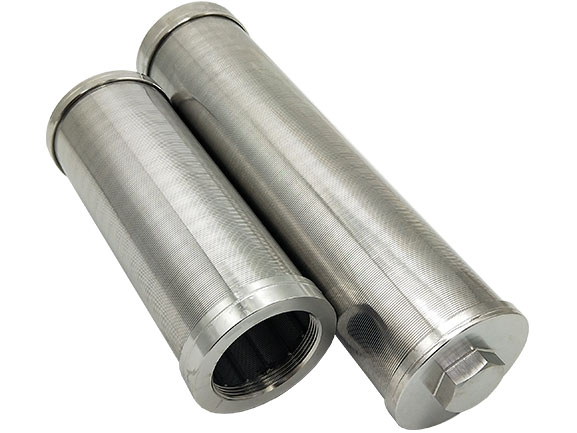
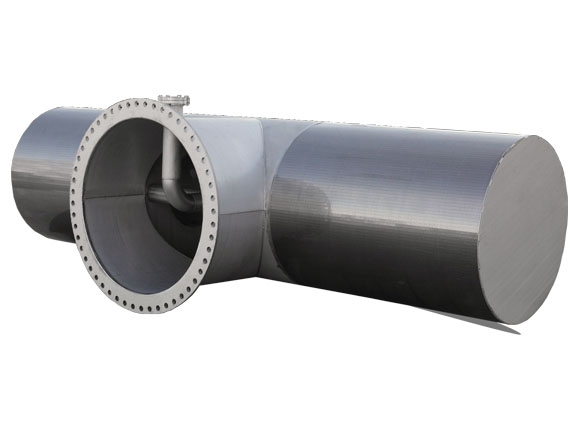
In simple terms, data center liquid cooling uses liquid instead of air to remove heat generated by servers. Because liquid has much higher heat transfer efficiency than air, it can more effectively support the high power consumption demands of AI and high-performance computing.
This technology mainly falls into three categories, each with different operating principles:
1. Cold Plate Liquid Cooling (Current Mainstream)
This is the most mature and widely deployed solution. It uses indirect, non-contact cooling, removing heat via a "cold plate" attached to the chip.
· Principle: The cold plate is tightly attached to the CPU/GPU. The coolant inside absorbs heat and flows to an external Coolant Distribution Unit (CDU) , where the heat is exchanged before the cooled liquid circulates back.
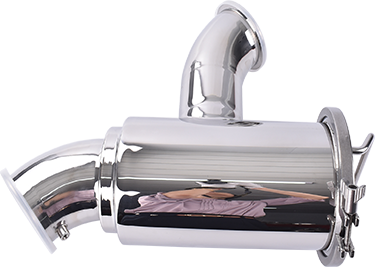
2. Immersion Liquid Cooling (Extreme Cooling)
Considered the ultimate solution, this involves submerging servers directly into a specially designed, non-conductive coolant. There are two types:
· Single-Phase Immersion: The coolant remains liquid. A pump circulates it to an external heat exchanger for cooling.
· Two-Phase Immersion: The coolant has a low boiling point (e.g., ~50°C). It boils into vapor upon contact with hot components; the vapor rises, condenses on a cooler surface, and drips back, using evaporation for even higher efficiency.
3. Spray Liquid Cooling (Precision Cooling)
This precise approach sprays coolant directly onto the chips via nozzles.
· Principle: Nozzles in the chassis spray coolant precisely onto heat-generating components. After absorbing heat (and potentially vaporizing), the fluid is collected and recirculated.
· Status: Higher technical difficulty (needs to prevent spray drift and corrosion) and not yet widely adopted.
Core Components and Systems
Liquid cooling is a system-level engineering effort, typically including:
· Coolant Distribution Unit (CDU): The "heart and brain" – drives, filters, monitors, and ensures safety (e.g., leak detection). 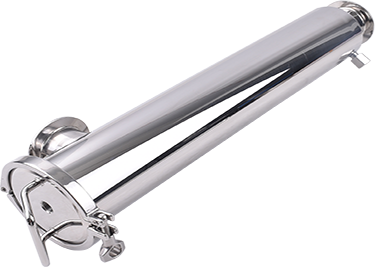
· Manifold: Distributes coolant evenly to each server within a rack.
· Coolant: Water/glycol solutions for cold plates; immersion requires highly dielectric, non-corrosive fluids like fluorinated liquids or synthetic oils. Domestic fluorinated liquid costs have dropped significantly.
Why Liquid Cooling is Needed?
· High Power Demand: AI chip power has exceeded air cooling limits (power density >20kW per rack is challenging). Liquid cooling supports much higher densities (e.g., 800kW racks).
· Extreme Energy Efficiency (PUE): Can approach 1.0 (traditional air cooling is ~1.4-1.6). Immersion can also remove server fans for silent operation.
· Improved Reliability: Eliminates major hardware killers like high temperatures, dust, and vibration, potentially extending equipment life.
If you have any requirement or comments, please contact or leave message to us.
Data Center Liquid Cooling Equipment introduction and application
View More >First Lines of Defense in data center cooling systems
View More >Types of Filters Required in a Clean-in-Place (CIP) System: Locations and Primary Functions
View More >Data Center Immersion Cooling: Types of Coolants
View More >


Copyright © Hebei Huanzheng Filter Equipment Co., Ltd. All Rights Reserved
Powered by