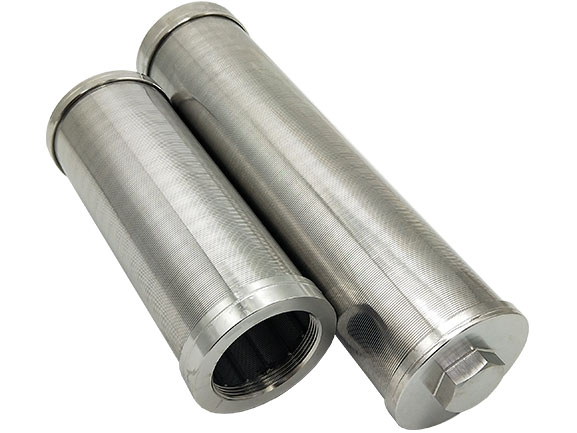
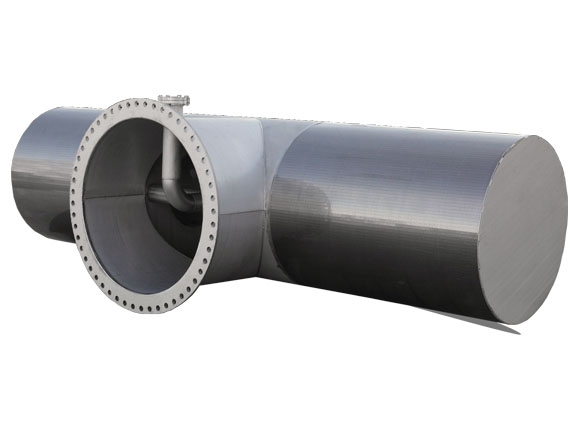
Demand for immersion liquid cooling systems in data centers and large-scale server environments is surging.
To ensure stable inventory and prepare for large-scale deployment by 2027, companies such as Google, NVIDIA, and Microsoft are actively securing production capacity in China;
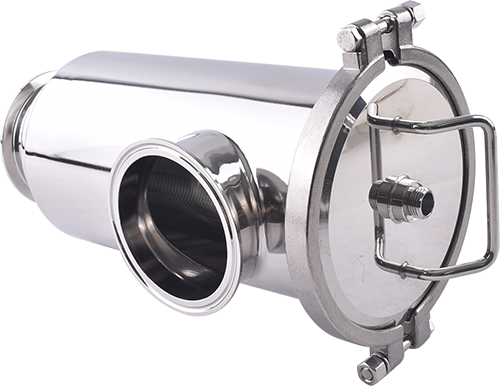
within this context, filters—critical components of the Coolant Distribution Unit (CDU)—are receiving significant attention.
Why are immersion liquid cooling systems attracting so much attention and experiencing such a surge in demand? 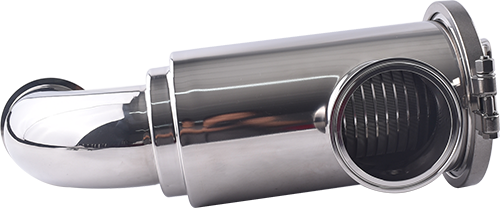
I. Core Underlying Driver: The Explosion in AI Computing Power Surpasses the Physical Limits of Air Cooling (Root Cause)
Traditional internet services rely primarily on CPUs, with single-rack power consumption ranging from only 5 to 20 kW; air cooling—utilizing air conditioners and fans—is entirely sufficient to meet these thermal management needs.
With the advent of large model training and the widespread adoption of generative AI, the power consumption of high-performance GPU chips has surged dramatically: the NVIDIA H100 consumes 700W, while the GB200-300 exceeds 1,000–1,400W. Consequently, single-rack power consumption has skyrocketed to 60–140 kW, far exceeding the 30–40 kW thermal dissipation limit of air cooling. Air has a significantly lower specific heat capacity and thermal conductivity than liquid (liquid thermal conductivity is roughly a thousand times that of air); thus, cold air cannot dissipate high-density heat quickly enough, leading to chip overheating, thermal throttling, reduced computing performance, and localized thermal failures. In contrast, liquid cooling (including cold-plate and immersion technologies) directly removes concentrated heat, ensuring stable GPU operation at full load—making it the only viable thermal management solution for high-performance computing clusters.
Furthermore, AI large model training requires thousands of GPUs to run continuously for weeks; temperature fluctuations can easily cause task interruptions. Liquid cooling maintains more stable temperatures, thereby drastically reducing the massive economic losses associated with cluster downtime.
II. Mandatory Constraints: Policy and Carbon Neutrality Goals (Forced Driver)
Countries worldwide have introduced energy consumption regulations that use PUE (Power Usage Effectiveness) to constrain data center energy use: the closer the PUE is to 1, the higher the energy efficiency.
1. Traditional air-cooled data centers typically have a PUE of 1.45–1.8, making it difficult to meet the strict standards (PUE ≤ 1.2–1.25) now required for new large-scale data centers in many regions.
Liquid cooling can stabilize PUE at 1.05–1.1, easily meeting energy-saving targets.
2. Policies such as the EU carbon tax, national "dual carbon" goals (carbon peaking and neutrality), and initiatives like China's "East Data, West Computing" project mandate the adoption of liquid cooling for large-scale computing nodes. Projects failing to meet energy standards are denied construction permits and face penalties for excessive electricity costs, compelling global cloud providers and computing enterprises to replace their thermal management systems on a large scale.
III. Economic Benefits of Long-Term Operation (Market Drivers)
1. Electricity Cost Savings: Liquid cooling eliminates the high energy consumption associated with air conditioning units and high-power cooling fans, reducing overall cooling energy use by 30%–40% compared to air cooling. Large-scale intelligent computing centers can save massive amounts on annual electricity costs, allowing the additional initial investment to be recouped within 2–3 years.
2. Extended Hardware Lifespan and Lower Failure Rates: Stable facility temperatures and reduced dust accumulation extend the service life of servers and GPUs by approximately 30%. This lowers costs associated with equipment replacement and cluster maintenance while also reducing noise pollution from facility fans.
3. Improved Land Utilization: Liquid cooling eliminates the need for extensive air ducts and bulky cooling equipment, allowing more computing cabinets to be deployed within the same building footprint. Computing power density per unit of land increases by 20%–40%, alleviating land resource constraints.
4. Waste Heat Recovery and Utilization: High-temperature water extracted by the liquid cooling system can be used for municipal or industrial heating, turning waste heat into a valuable resource and further boosting project returns.
IV. Technological Maturity and Standardization Driven by Industry Leaders
1. Components such as cold plates, immersion cooling fluids, piping, and Coolant Distribution Units (CDUs) have achieved mass production. Domestic manufacturing has lowered equipment costs—addressing the issue of high initial prices—and significantly improved standardization, enabling rapid, large-scale deployment.
2. Global computing giants—including NVIDIA, Google, Microsoft, and Amazon—have mandated liquid cooling in the technical specifications for next-generation hardware. This has driven upstream and downstream companies (spanning server manufacturers and data center infrastructure providers) to fully adapt to liquid cooling, fostering an industry-wide consensus and transforming liquid cooling from an optional choice into a standard feature of computing infrastructure.
V. Advantages in Diverse Environmental Conditions
In high-altitude regions, thin air significantly reduces air-cooling efficiency, while in tropical regions, air conditioning consumes vast amounts of energy. Liquid cooling is unaffected by atmospheric pressure or external temperatures, offering inherent advantages for computing nodes in Southeast Asia, the Middle East, and high-altitude areas. As computing infrastructure expands globally, the demand for liquid cooling solutions continues to rise. In summary, the ultra-high heat density driven by AI is the fundamental driver of demand, while energy consumption policies act as rigid constraints; cost-benefit considerations and industry maturity serve as prerequisites for implementation. The convergence of these factors is fueling an explosive short-term rise in global demand for data center liquid cooling systems.
In summary, the ultra-high heat density driven by AI is the fundamental driver of demand, while energy consumption policies act as rigid constraints; cost-benefit considerations and industry maturity serve as prerequisites for implementation. The convergence of these factors is fueling an explosive short-term rise in global demand for data center liquid cooling systems.
Data Center Liquid Cooling Equipment introduction and application
View More >First Lines of Defense in data center cooling systems
View More >Types of Filters Required in a Clean-in-Place (CIP) System: Locations and Primary Functions
View More >Data Center Immersion Cooling: Types of Coolants
View More >


Copyright © Hebei Huanzheng Filter Equipment Co., Ltd. All Rights Reserved
Powered by